Aid and subsidies
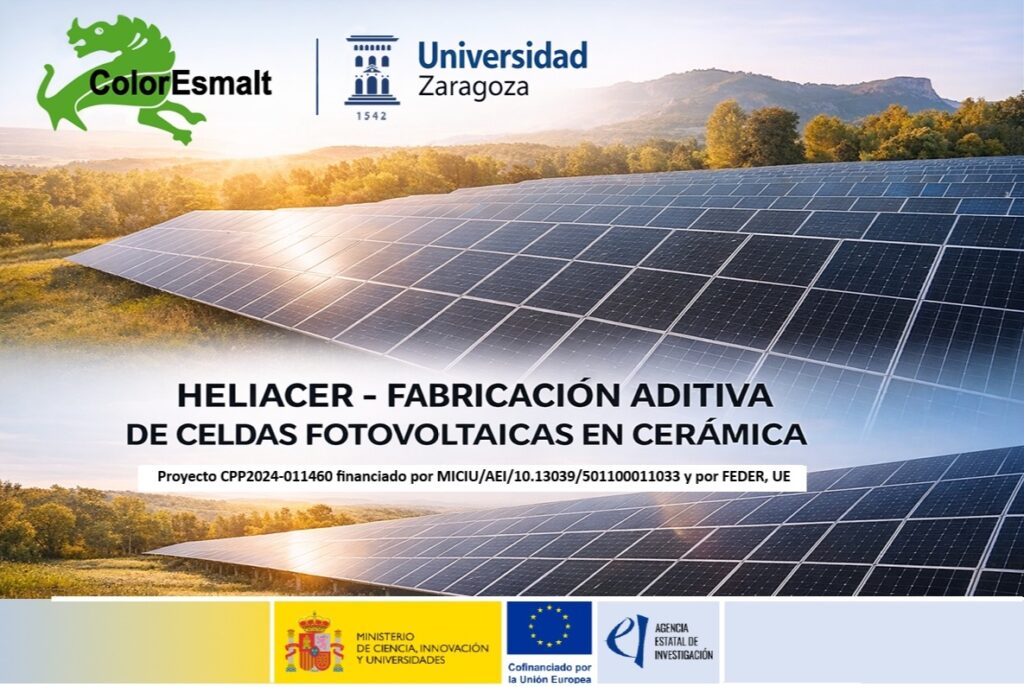
COLOR ESMALT, in collaboration with the University of Zaragoza, has secured funding for the HELIACER research project – Additive Manufacturing of Ceramic Photovoltaic Cells – aimed at addressing current environmental challenges.
HELIACER (CPP2024-011460), funded by MICIU/AEI/10.13039/501100011033 and by the European Union through FEDER, focuses on the design and development of inkjet ink formulations for the additive manufacturing of photovoltaic cells directly integrated onto ceramic cladding tiles. The project employs fully inorganic perovskite due to its superior technical performance and long-term stability, ensuring enhanced durability of the final product.
This funding forms part of the 2024–2027 State Plan for Scientific, Technical and Innovation Research, within the framework of the Spanish Strategy for Science, Technology and Innovation 2021–2027, approved by the Council of Ministers on 7 May 2024. The programme aims to address major scientific and technological challenges by promoting private-sector research and facilitating knowledge transfer. The grants, awarded in the form of recoverable FEDER advances and direct subsidies, may be co-financed by the European Union through the European Regional Development Fund (ERDF), under Spain’s 2021–2027 Multi-Regional ERDF Operational Programme.
Development of low-temperature ceramic products processed using laser kiln technology
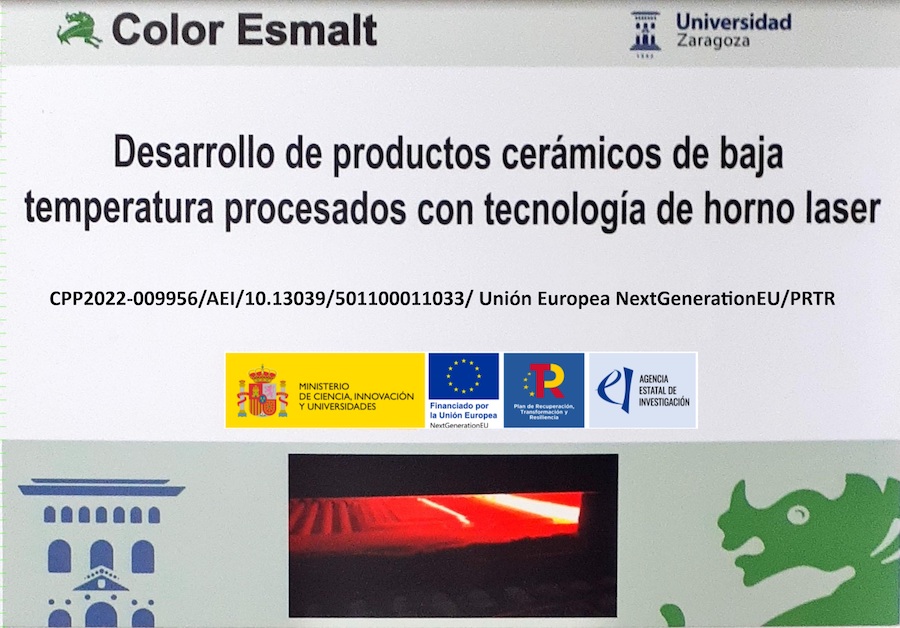
COLOR ESMALT, together with the University of Zaragoza, has secured funding for the project Development of Low-Temperature Ceramic Products Processed Using Laser Kiln Technology, focused on addressing current environmental challenges.
The aim of the project is to develop new ceramic materials that can be processed at lower temperatures than conventional ceramic materials currently available on the market, while maintaining compatibility with glazes and other coating materials that typically require higher firing temperatures to achieve optimal performance.
Laser kiln technology offers an innovative processing alternative. In this approach, the material surface is treated with a laser beam while the piece moves through a kiln, minimizing the risk of crack formation caused by thermal stresses generated during laser treatment. Through the careful selection of processing parameters, it is possible to achieve he temperatures required to integrate these materials into the substrate surface.
The resulting materials will deliver performance comparable to current ceramic products, while operating at lower processing temperatures, thereby reducing atmospheric emissions associated with greenhouse gases. Furthermore, laser technology opens up new possibilities for developing materials that cannot be produced using conventional processing techniques.
During the project, COLOR ESMALT will develop new products specifically designed for laser kiln processing. In collaboration with the University of Zaragoza research group, both processing conditions and material compositions will be optimized to achieve innovative ceramic solutions and a significant reduction in energy consumption.
In addition, in partnership with a CSIC research group, the project will explore the use of laser technology to modify surface properties and develop products with new functionalities.
The project Development of Low-Temperature Ceramic Products Processed Using Laser Kiln Technology (CPP2022-009956) is funded by MCIU/AEI/10.13039/501100011033 and by the European Union “NextGenerationEU”/PRTR programme. This funding aims to address major scientific and technological challenges by promoting private-sector research and knowledge transfer within the framework of the Spain’s State Plan for Scientific, Technical and Innovation Research 2021–2023.
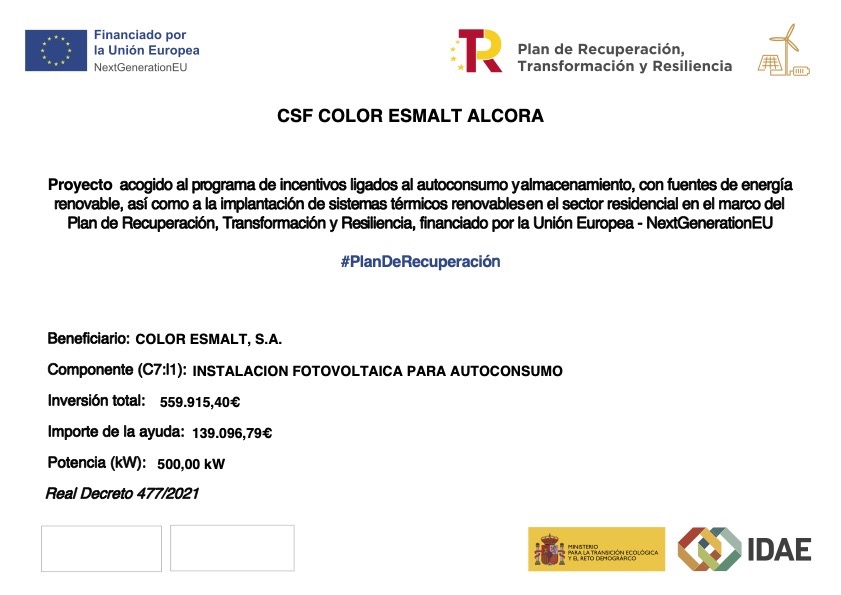
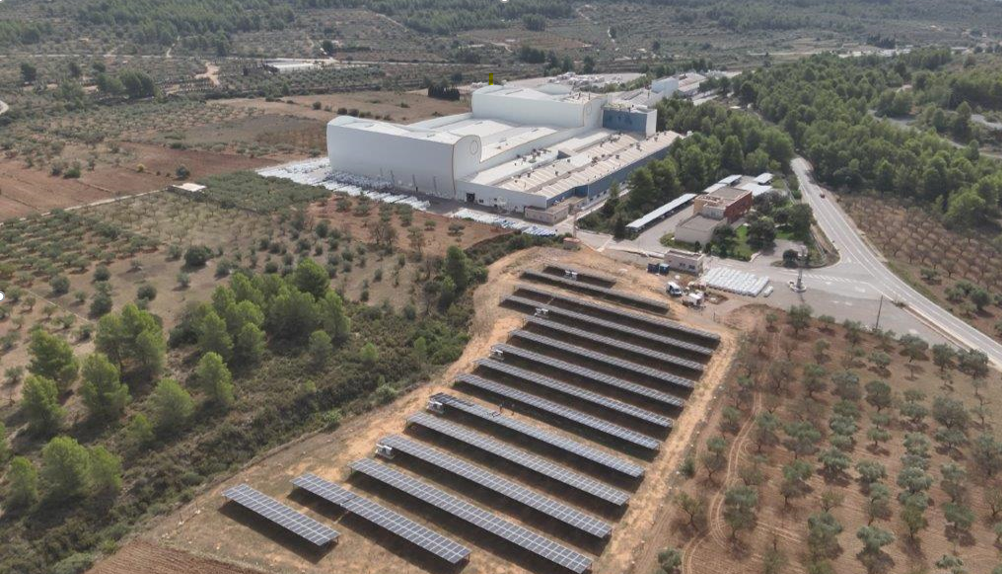
Photovoltaic installation for self-consumption